Crown thinning in Hampstead
If you are looking for crown thinning in Hampstead, you may already know that trees in this area need a careful, thoughtful approach. Hampstead has a distinctive mix of mature gardens, period homes, leafy streets, estate landscaping, and commercial premises where trees are part of the character of the place. When a tree becomes too dense, blocks light, catches too much wind, or starts to feel overwhelming in a smaller garden, crown thinning can offer a practical solution without stripping the tree back or changing its natural shape.
For local homeowners, landlords, managing agents, and business owners, the aim is usually the same: improve light, reduce wind resistance, maintain the tree’s health, and keep the setting attractive and safe. Done properly, crown thinning is a precise arboricultural service rather than a heavy-handed cut. It requires experience, an understanding of tree biology, and a sensitive eye for what suits Hampstead’s varied properties, from Victorian terraces and conversions to larger detached houses, garden squares, and commercial courtyards.
This page explains what the service involves, when it is useful, how it works, and what local customers should expect when requesting a quote. If you want a tree to look more open and balanced while keeping its natural form, contact us today to discuss the best approach for your site.
What crown thinning means for Hampstead properties
Crown thinning is the selective removal of small branches throughout the canopy to reduce density while preserving the tree’s overall shape and size. Unlike reduction, which shortens the crown, thinning focuses on opening up the interior and outer sections in a controlled way. The result is usually a lighter, airier canopy that still reads as the same tree from the street or garden.
In Hampstead, this can be especially useful where mature trees are close to buildings, gardens are shaded by neighbouring canopies, or there is a need to improve daylight into rooms, patios, and shared outdoor spaces. Local trees often sit within tight residential plots, front gardens, mews-style access routes, and communal areas where a full canopy can feel too dense for the surrounding space.
It is important to distinguish crown thinning from other pruning types. A tree may need deadwood removal, crown lifting, crown reduction, or a combination of works, depending on its condition and location. A sensible arborist will look at the tree in context and recommend the least intrusive solution that still meets your objectives. That is especially important in Hampstead, where many trees contribute significantly to the look and feel of the property as well as the street scene.
Why people request thinning rather than heavier pruning
Many customers ask for thinning because they want better light and airflow without making the tree look harsh or overworked. A heavily cut tree can lose its shape, suffer stress, and become visually unsuitable for a prominent setting. Thinning is often preferred when the tree is healthy and structurally sound, but simply too dense for the location.
For gardens in Hampstead, common reasons include shaded lawns, damp seating areas, reduced visibility, blocked views of the sky, and leaves or debris building up more heavily than desired. In commercial locations, such as forecourts, office courtyards, educational premises, or hospitality settings, thinning can improve comfort and access while keeping the landscape welcoming.
Where the tree is mature and well established, careful selective pruning can maintain character and encourage a more balanced crown. That is why local knowledge matters: the best result is not always the most dramatic cut, but the one that suits the tree, the property, and how the space is used day to day.
Benefits of crown thinning for homes and businesses
There are several practical reasons why customers in Hampstead request crown thinning. The most common benefit is improved light penetration. A dense canopy can make a room feel dark, particularly in lower-ground, rear, or side-facing spaces that are common in local period homes. By opening the canopy thoughtfully, more natural light can reach windows, patios, and garden paths.
Another benefit is reduced wind resistance. Dense trees can act like sails in strong weather, which is relevant in exposed gardens, along open roads, and near taller buildings. Thinning can help the tree move more naturally in the wind, reducing strain on branches while keeping the crown visually pleasing.
In many cases, customers also want to improve airflow around the crown. Better airflow can be useful where branches are too closely packed, where dampness lingers, or where a tree is contributing to a humid, enclosed feel in a small garden. For some species, this can also help reduce the conditions that encourage pests or disease, although every tree should be assessed individually.
Practical benefits often noticed after thinning
- More daylight reaching windows, gardens, and seating areas
- A lighter canopy that still keeps a natural appearance
- Less wind drag in exposed positions
- Improved visibility through the tree
- Better balance where the crown has become crowded or uneven
- A more comfortable feel for outdoor spaces used by families, guests, or customers
For local residential and commercial customers alike, the value of the work is often felt immediately. A well-thinned tree can make a courtyard feel more inviting, a garden more usable, and a frontage more polished without removing the tree that makes the property attractive in the first place.
If you are comparing options, it helps to ask whether thinning alone will solve the issue or whether another form of pruning would be more appropriate. A responsible tree team will explain the differences clearly and recommend a solution that fits the tree’s condition and your priorities.
How crown thinning is carried out
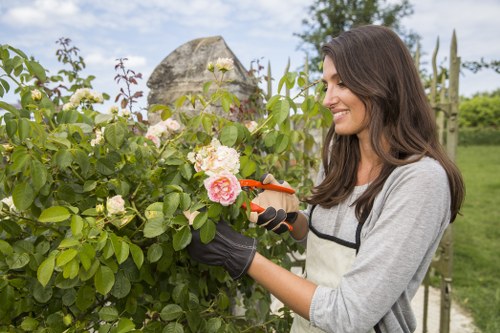
Professional crown thinning is a selective, measured process. It is not about taking branches at random. The arborist will begin by assessing the species, age, structure, vitality, and location of the tree. From there, they identify the branches that can be removed to reduce density while keeping the crown well distributed and visually balanced.
As a rule, thinning targets smaller branches and secondary growth rather than making large, unnecessary cuts. The aim is to retain the framework of the crown and avoid concentrating too much weight in one area. If the tree has deadwood, rubbing branches, crossing limbs, or congested growth, these may be addressed as part of the work if appropriate.
Good practice also means working with the tree’s natural form. Different species respond differently to pruning. Some trees are tolerant of selective reduction in the canopy, while others need a lighter hand. In Hampstead, where mature and specimen trees are often a key feature of the landscape, the work should always be tailored rather than formulaic.
Typical stages in the service
- Initial inspection of the tree and surrounding area
- Discussion of the customer’s goals, such as more light, better airflow, or a tidier canopy
- Assessment of access, parking, and any nearby constraints
- Selective pruning to reduce canopy density
- Removal of cut material and basic site tidy-up
- Final check to ensure the tree looks balanced and the agreed result has been achieved
For more complex properties, this may also involve checking whether nearby trees, fences, sheds, garden structures, or overhead features could affect the work. In a place like Hampstead, where access can be tight and neighbouring boundaries close, planning matters as much as the pruning itself.
Book your service now if you want a clear assessment and a careful plan for your tree. The right approach should leave you with a healthier-looking crown and a result that suits the setting, not just the tree in isolation.
Why Hampstead customers often need a local arborist
Choosing a local tree team for crown thinning in Hampstead brings practical advantages. The area has a wide mix of property types, from elegant terraced houses and mansion blocks to garden squares, schools, community spaces, boutiques, cafés, offices, and larger private gardens. Each setting creates different access and safety considerations.
Parking can be limited in parts of Hampstead, and many streets are busy, narrow, or subject to loading restrictions. That means the team carrying out the work needs to plan carefully for vehicle access, equipment unloading, and the safe handling of branches and arisings. On some sites, access may need to be coordinated through side passages, rear gardens, shared drives, or internal courtyards.
A local company is also more likely to understand the practical rhythm of the area. In residential streets, it helps to work efficiently and respectfully. In commercial settings, it may be important to minimise disruption during trading hours or around deliveries, visitors, and staff movement. This is especially relevant where trees are part of the customer-facing image of a property.
What local knowledge can help with
Understanding the layout of surrounding streets, nearby green spaces, and the typical constraints of local buildings can make planning smoother. A knowledgeable team will know how to approach tight access, how to protect garden surfaces, and how to set up work in a way that keeps the site safe and manageable.
Local experience also helps when trees are close to adjoining properties. In dense neighbourhoods, the way branches overhang boundaries or shade a neighbouring garden can become a practical issue. A careful arborist will work with this in mind and help you find a balanced outcome that respects the tree and the surrounding homes.
For landlords and property managers, using a local service can make repeat maintenance easier too. Mature planting often needs ongoing attention, and it is simpler to keep on top of that when the team is already familiar with the site and its access challenges.
What is included in a crown thinning service
While every job is different, a professional crown thinning service usually includes a clear and practical set of actions designed to make the tree safer, healthier-looking, and more suitable for its surroundings. Customers often want to know exactly what they are paying for and what outcome to expect, especially when the tree is prominent or near valuable parts of the property.
Typical inclusions may involve selective branch removal, shaping for balance, minor deadwood removal if agreed, and the clearance of waste from the site. On more complex trees, the focus may be on improving structure, reducing crowding, or creating additional light without removing too much canopy.
It is also common for a tree surgeon to flag any extra issues noticed during the inspection, such as signs of decay, split branches, rubbing limbs, or root-related concerns. That does not mean the tree always needs additional work immediately, but it does mean the customer gets a clearer understanding of the tree’s condition.
What customers often value most
- A neat, natural-looking finish rather than an over-cut appearance
- Clear explanation of what will and will not be removed
- Respect for the surrounding garden, paving, planting, and boundaries
- Efficient removal of branches and debris
- A result that improves light and usability without spoiling the tree
Request a free quote if you would like a straightforward breakdown of the work required. A good quotation should reflect the tree’s size, condition, access, and the complexity of the site rather than using a one-size-fits-all approach.
When crown thinning is the right choice
Crown thinning is not needed for every tree. In some cases, a tree may simply need deadwood removal. In other situations, the crown may be too tall or wide and require reduction, or the lower branches may need lifting to create access. The right solution depends on what the tree is doing now and what the customer wants to achieve.
In Hampstead, crown thinning is often suitable where the tree is healthy but too dense for the available light or space. It can also be useful where a property has large windows, a shaded terrace, or a garden room that would benefit from a more open canopy above. If the tree is blocking a view that matters to the property, thinning may soften the obstruction without making the tree look severely cut back.
It may also be appropriate where there is concern about moisture and poor air movement in a sheltered garden. By reducing dense clustering of branches, airflow can improve through the crown, making the outdoor area feel fresher and less enclosed.
Signs that thinning may help
- The canopy looks dense, heavy, or crowded
- Daylight into the house has reduced over time
- The tree catches a lot of wind or sways heavily
- The crown is healthy but visually too bulky for the space
- There is excessive shading in the garden or on paths
- The property feels closed in by overhanging growth
Even when thinning is the likely answer, it is still worth having the tree inspected. An experienced arborist will check the structure first so that the pruning supports the long-term condition of the tree rather than creating new problems.
What to expect from a quotation
When you ask for a quote for crown thinning in Hampstead, the tree team should take time to understand the site before confirming the work. A proper quotation usually depends on several factors, and it is worth being wary of any estimate that seems to ignore access, tree size, or the amount of pruning required.
Pricing factors commonly include the height and spread of the tree, how much canopy needs selective thinning, how easy it is to reach the site, whether the tree is near a building or boundary, and how much waste needs to be removed. If the tree is in a tight rear garden or a location with limited parking, that may affect the labour and equipment needed.
Commercial jobs may also involve additional planning around operating hours, safeguarding the public, protecting surfaces, or working around other contractors. A local company should explain these considerations in plain language so you can make an informed decision.
Useful factors to ask about
- What type of pruning is being recommended and why
- Whether deadwood or crossing branches will be addressed
- How access and waste removal will be handled
- Whether the work may require checks for local restrictions
- What the tree should look like when the work is complete
Contact us today if you want a quotation that reflects the real conditions on site. The more precise the assessment, the more useful the final result will be for your property.
How to prepare your property before the work begins
A little preparation can help the day run smoothly and reduce the chance of delays. This is especially useful in Hampstead, where spaces can be tight and access is often shared or restricted. Before the team arrives, it helps to clear the area around the tree as much as possible and make sure gates, side passages, or rear access routes are available.
For residential customers, you may want to move garden furniture, potted plants, outdoor cushions, bikes, and fragile items away from the work area. If vehicles are usually parked in front of the property, it may be helpful to arrange space so equipment can be loaded safely. If the tree is in a rear garden, think about how waste will be carried out without damaging lawns, paths, or internal flooring.
For business customers, it is useful to inform staff or occupants about the timing of the work and to identify any areas that need to stay accessible. This might include entrances, customer paths, delivery bays, or communal routes. A bit of planning avoids interruptions and helps the team work more efficiently.
Simple preparation checklist
- Move delicate items from the work zone
- Ensure gates and access routes are unlocked and clear
- Check where vehicles can park or stop safely
- Alert neighbours if branches overhang shared boundaries
- Keep children and pets away from the area during the work
- Share any concerns about sheds, glass, planting, or surfaces near the tree
Good preparation does not need to be complicated. The aim is simply to make sure the work can proceed safely and efficiently, with the least possible disruption to your day.
Areas covered in and around Hampstead
Local customers often ask whether a team can also cover nearby neighbourhoods. Tree work is frequently organised by property location and access rather than by a single street, so it is common to serve surrounding parts of north and northwest London when the site fits the service area.
Depending on the job, crown thinning may be requested by customers in Hampstead Village, Hampstead Heath borders, Belsize Park, Swiss Cottage, Childs Hill, Golders Green, Highgate, West Hampstead, and nearby residential or commercial locations. The exact suitability of any booking will depend on the tree, access, and the type of work required.
Because many properties in this part of London have mature planting and limited outdoor space, local tree care often involves careful coordination and an understanding of how to work neatly around homes, shared areas, and business premises. A nearby team can usually plan visits more efficiently and respond more flexibly to the practical needs of the site.
Residential and commercial settings we commonly see
- Private front and rear gardens
- Townhouses and converted flats
- Communal gardens and shared outdoor areas
- Schools and education sites
- Offices, studios, and professional premises
- Hospitality and customer-facing properties
- Managed estates and landscaped grounds
Wherever the tree stands, the aim is the same: to create a result that is practical, attractive, and suited to the setting.
Frequently asked questions about crown thinning
Will thinning damage my tree?
When carried out correctly, crown thinning should not damage a healthy tree. The key is moderation and good judgement. Over-thinning or poor pruning can stress a tree, so it is important to use someone who understands the species and the site. A careful arborist will remove only what is necessary and preserve the tree’s natural balance.
How much of the canopy is usually removed?
That depends on the tree, the condition of the crown, and the outcome you want. The goal is not to create a dramatic hole in the canopy. Instead, the tree should look lighter and less crowded while still appearing full and natural. The amount removed should always be proportionate to the tree and the location.
How often should crown thinning be repeated?
There is no fixed timetable. Some trees may need attention again after a few years, while others will remain in good condition for longer. Growth rate, species, exposure, and site use all influence how soon the canopy becomes dense again. If the tree is in a busy or highly visible part of Hampstead, you may choose to monitor it more regularly.
Can thinning help if my garden feels too dark?
Yes, crown thinning can often help improve daylight, especially where the tree is positioned close to windows or where one mature canopy is shading a smaller garden. It will not turn shade into full sun, but it can make a noticeable difference to brightness and the overall feel of the space.
Is thinning suitable for all tree species?
Not every species responds in exactly the same way, which is why inspection matters. Some trees are ideal candidates for selective thinning, while others need lighter intervention. A proper assessment will consider the species, the crown structure, and how the tree will respond over time.
Do you handle waste removal?
Most customers expect branches and cut material to be removed as part of the service, along with a tidy finish to the site. If you have specific preferences about chippings, logs, or disposal, it is sensible to discuss that before the work begins.
Why a careful local service makes a difference
There is a real difference between simply cutting branches and providing a thoughtful tree care service. In Hampstead, that difference matters because the trees are often part of the identity of the property and the street. A good result should improve the way the tree works in the space without making it look stripped or uneven.
That is why customers often choose a local company for crown thinning: it is easier to arrange a visit, easier to manage access, and easier to get advice that reflects the realities of local homes and businesses. Whether you are maintaining a cherished garden tree, managing a rental property, or keeping commercial premises smart and welcoming, the work should be tailored to your needs.
Book your service now if you are ready to improve light, balance, and comfort around your tree. If you are still deciding, request a free quote and ask for an assessment of the best pruning approach for your site.
Final thoughts for Hampstead customers
Crown thinning in Hampstead is often the right choice when a tree is healthy but too dense for the space around it. It can improve daylight, reduce wind drag, and make a garden or frontage feel more open without losing the character of the tree. With mature planting, close boundaries, and a mix of residential and commercial properties, local experience is especially valuable.
If you want the work done neatly, safely, and with respect for the tree’s natural shape, choose a service that takes time to understand the site and explain the approach clearly. Contact us today to discuss your tree, ask about the most suitable pruning option, and take the next step toward a lighter, healthier-looking canopy.
Whether the tree sits beside a Hampstead townhouse, a shared garden, or a business entrance, a carefully managed crown thinning service can make a noticeable difference to how the space feels every day.